Tag: Epistle to Titus (Page 1 of 5)

Krauter, Die Pastoralbriefe

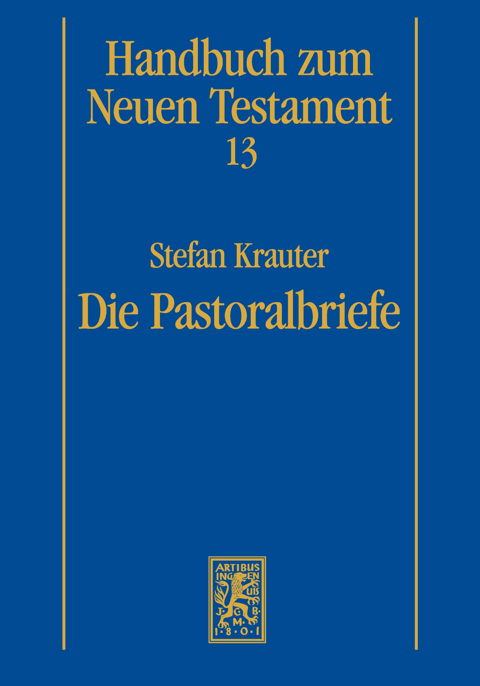
Stefan Krauter, Die Pastoralbriefe. Handbuch zum Neuen Testament 13. Tübingen: Mohr Siebeck, 2026. 

Stefan Krauter (PhD, University of Tübingen) serves as a professor of New Testament at the Univerisity of Zurich. His faculty page indicates that in addition to a research focus on the Pauline corpus, he devotes attention to the examination of the New Testament writings in their relationships to the Greek and Latin literature of the early imperial period and the interpretation of the Pauline letters in the 16th century.

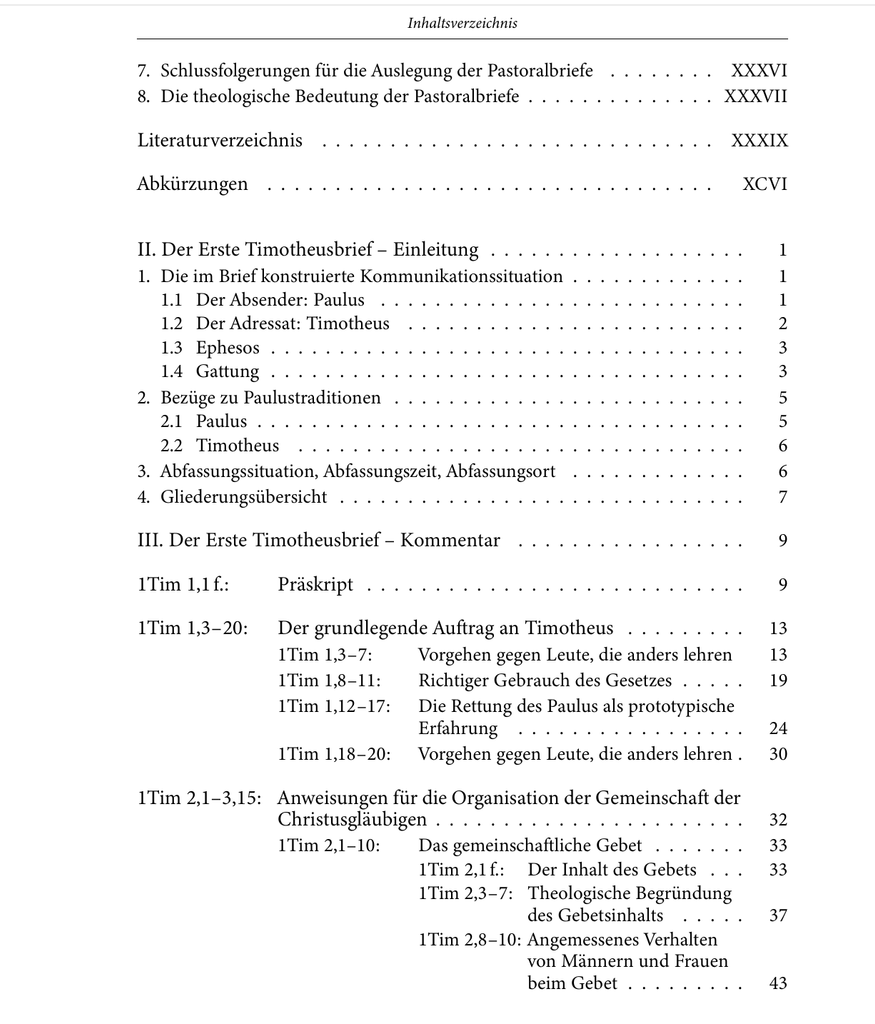
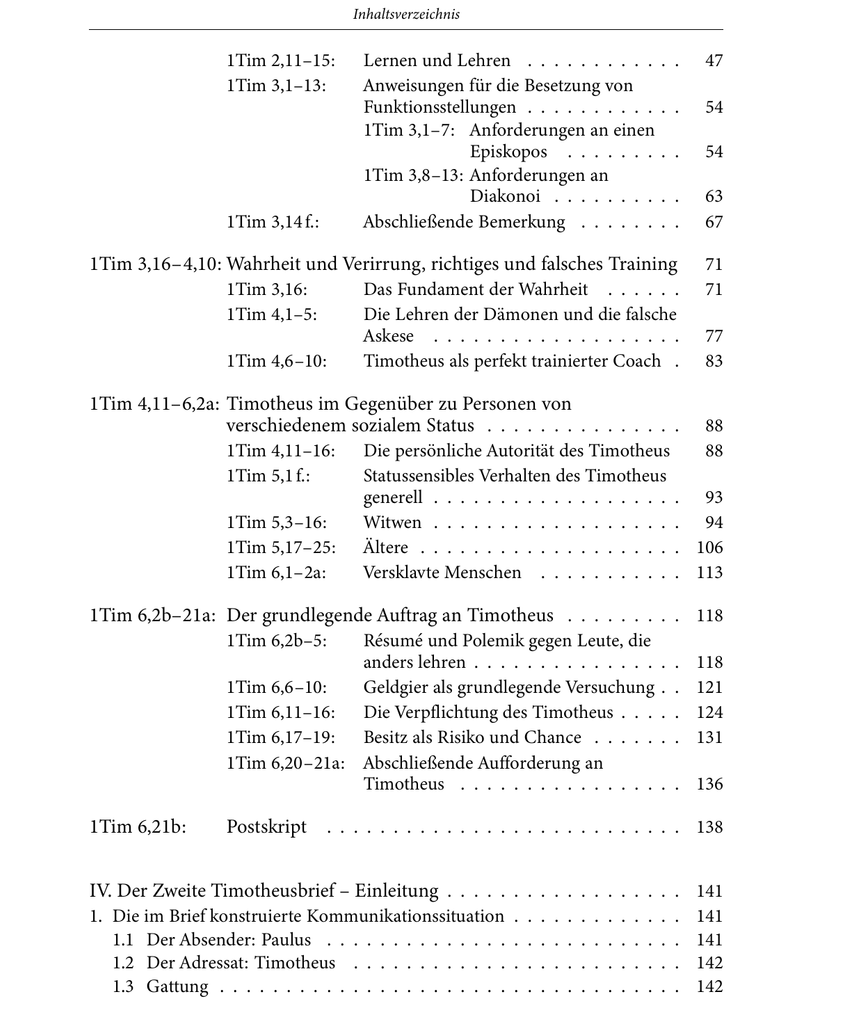
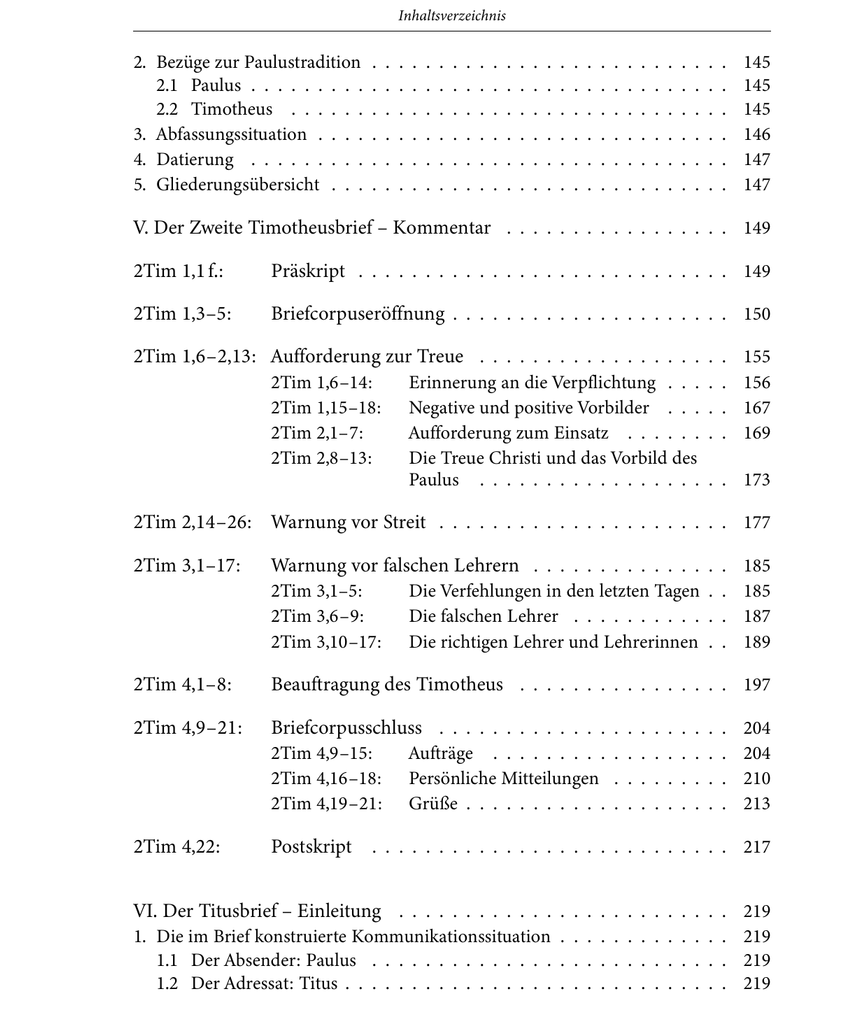
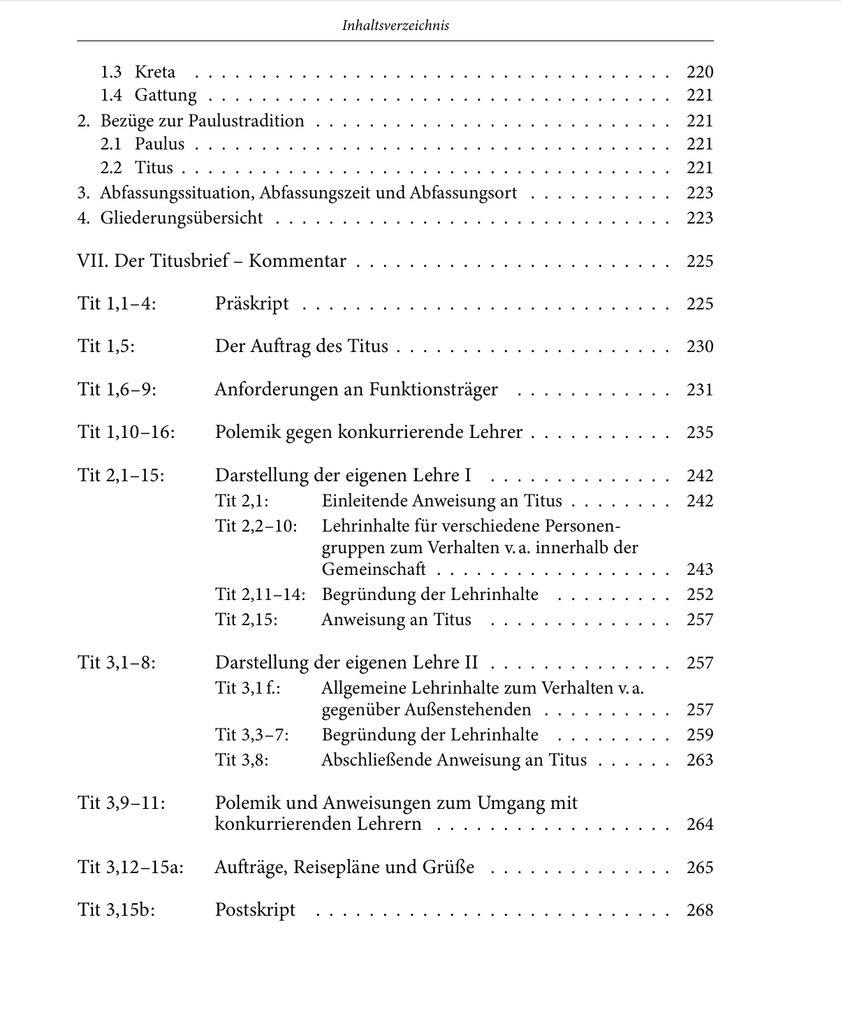
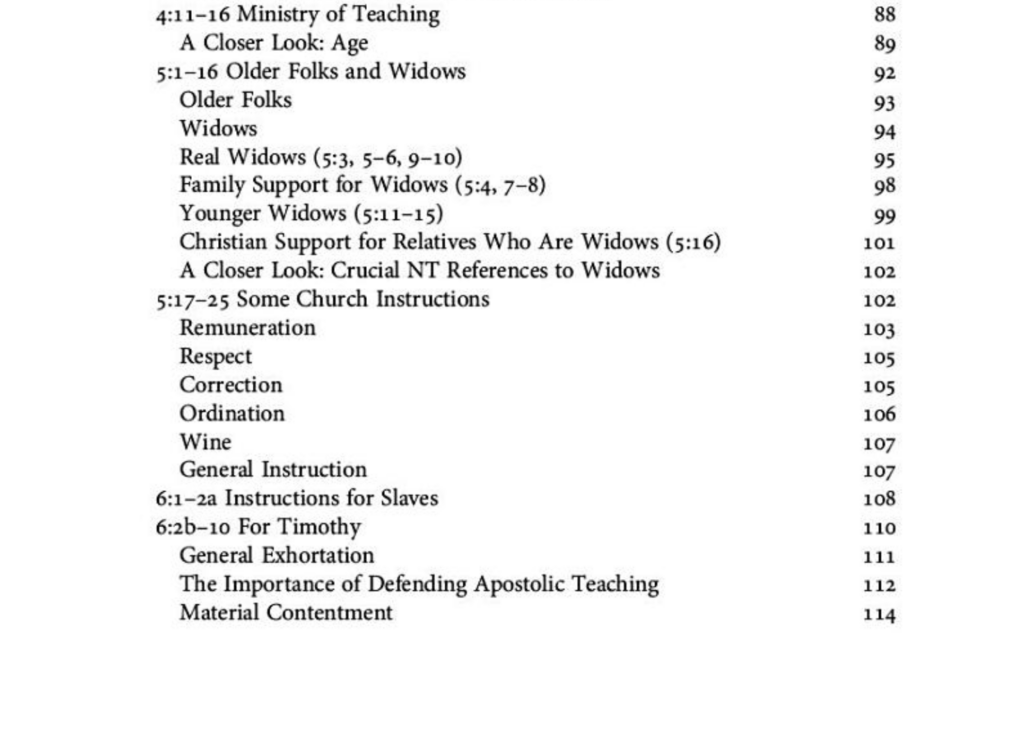
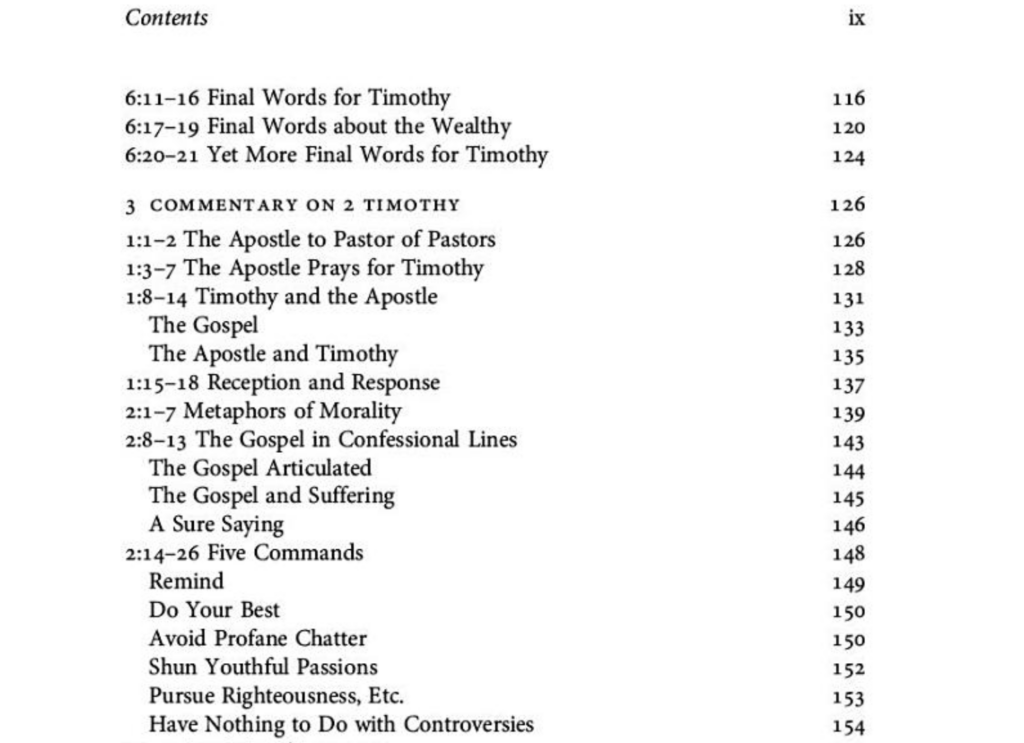
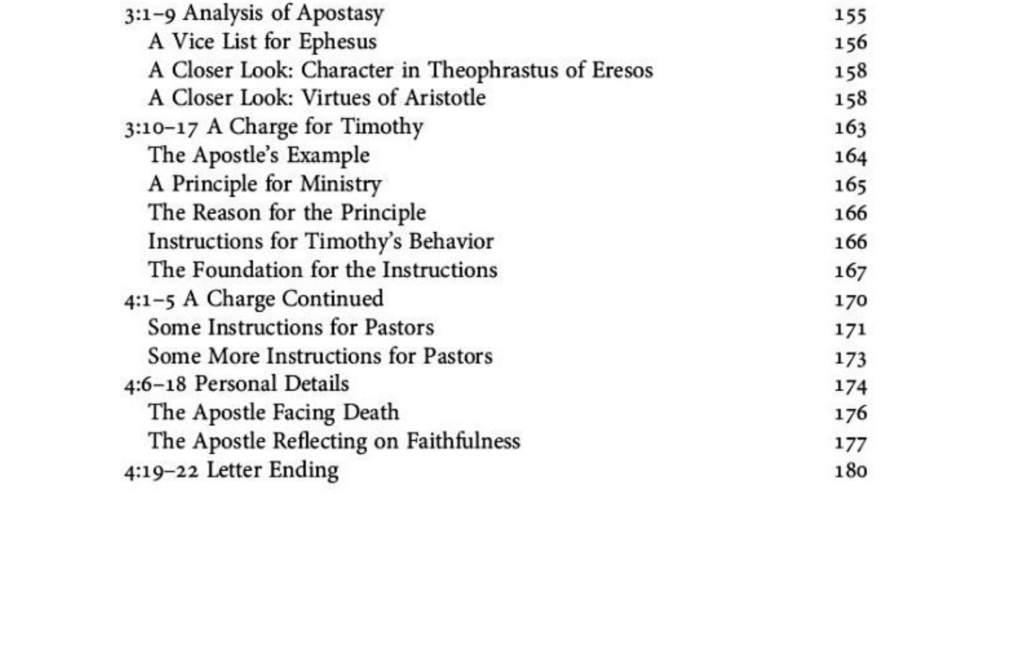
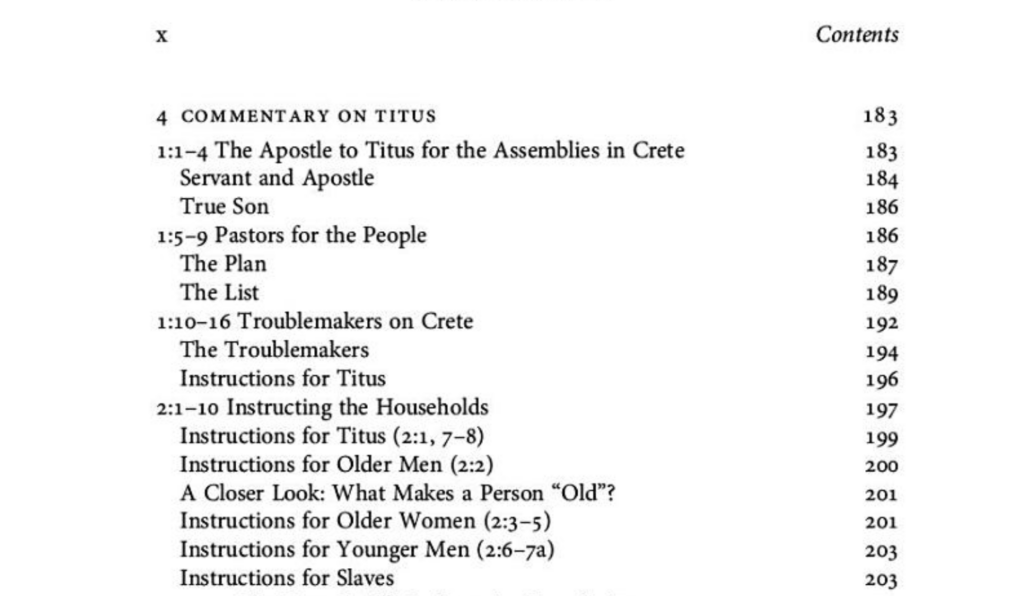
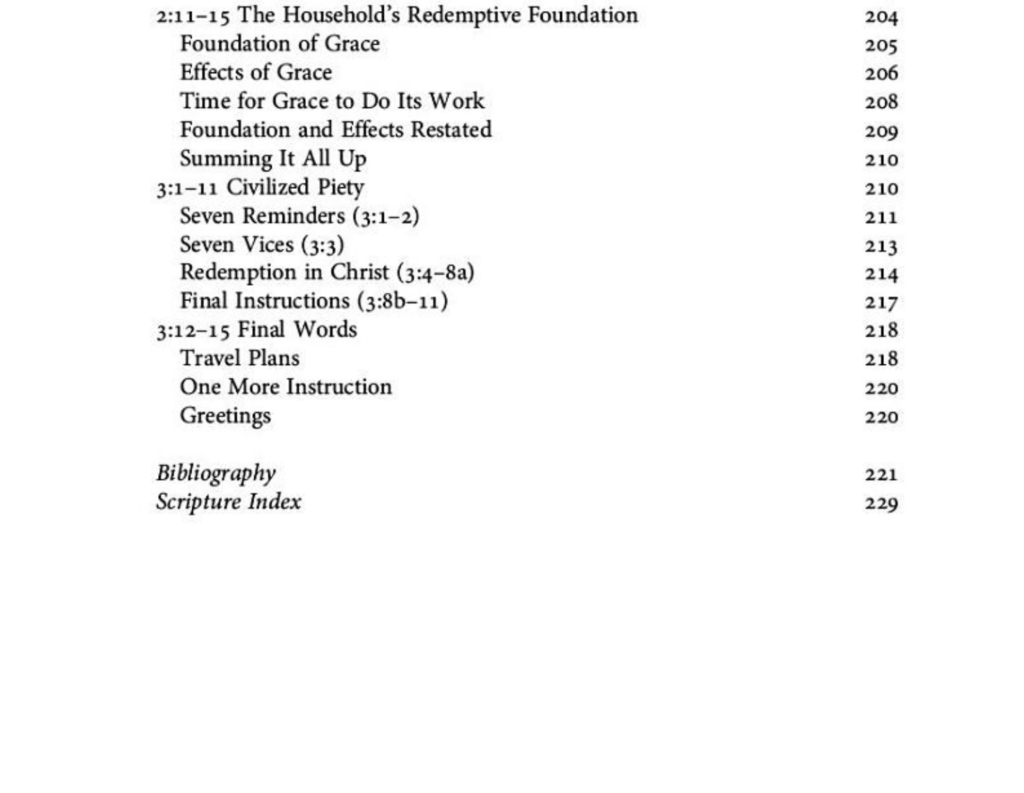
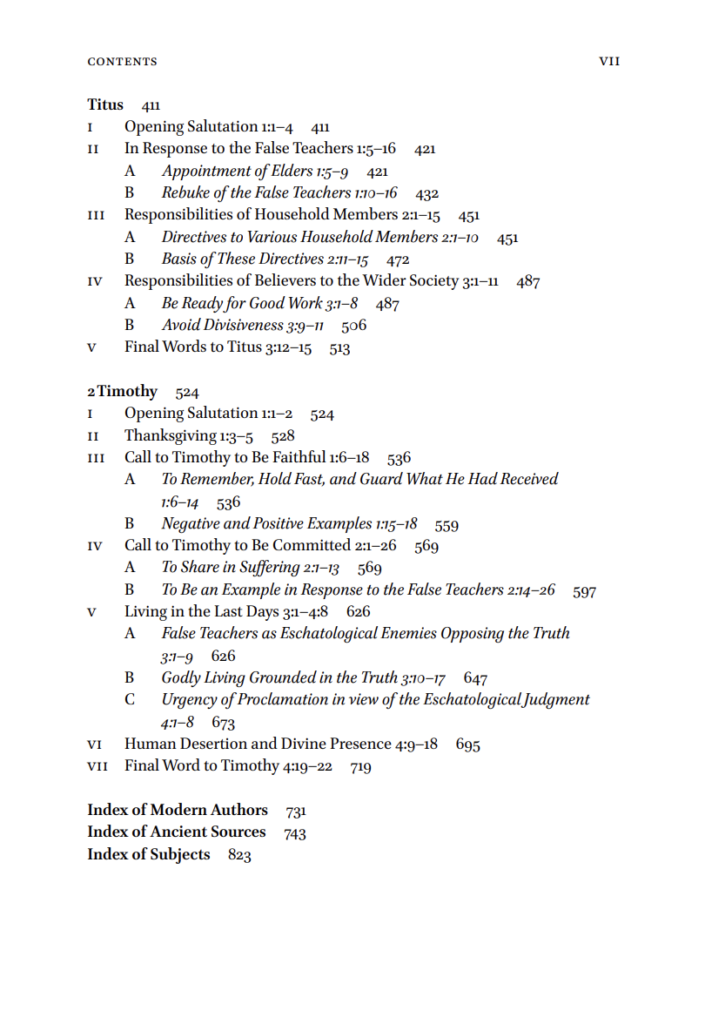
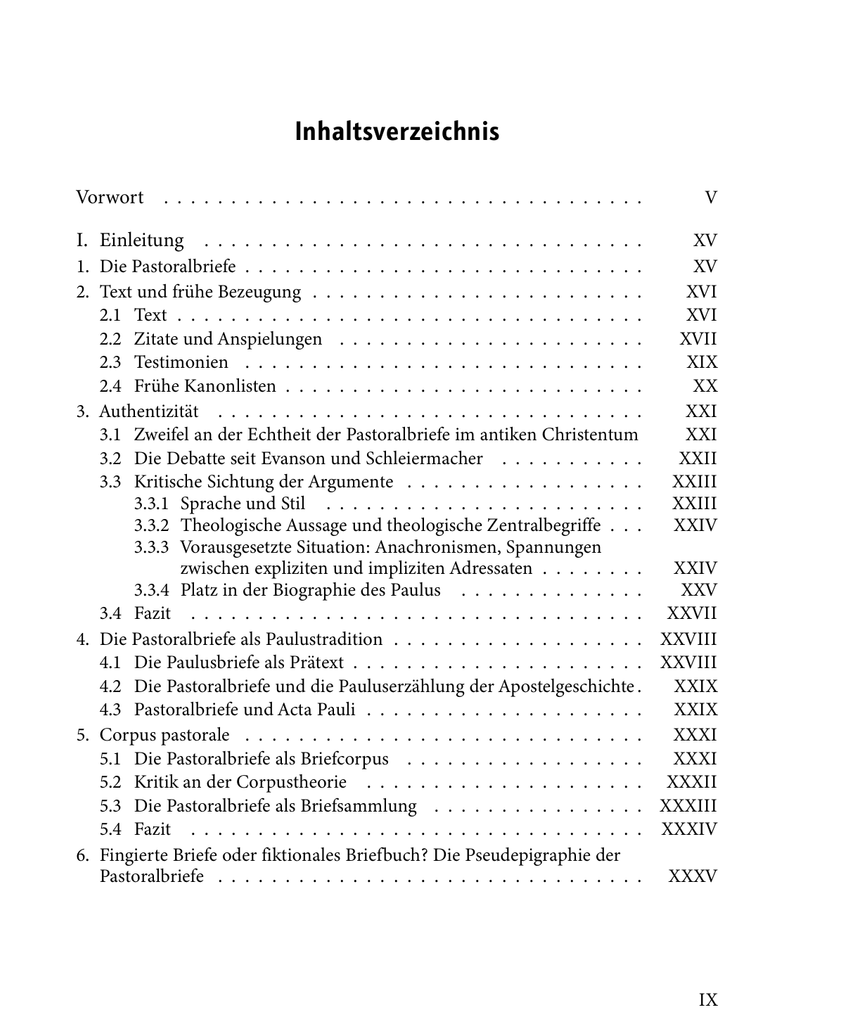
Krauter has now produced the commentary on the Pastoral Epistles in the Handbuch zum Neuen Testament to replace the hoary Die Pastoralbriefe of Martin Dibelius. Dibelius’s influential volume was originally published in 1913 as Die Briefe des Apostels Paulus. An Timotheus I, II an Titus, and saw its fourth edition in 1966, revised by Hans Conzelmann, then translated into English as The Pastoral Epistles in the Hermeneia series in 1972. Krauter’s replacement volume has now been published 120 years after Dibelius’s first edition, and 54 years after the Hermeneia volume. The table of contents and a sample of the work are available at Mohr Siebeck, and I have reproduced the TOC at the end of this post for convenience.

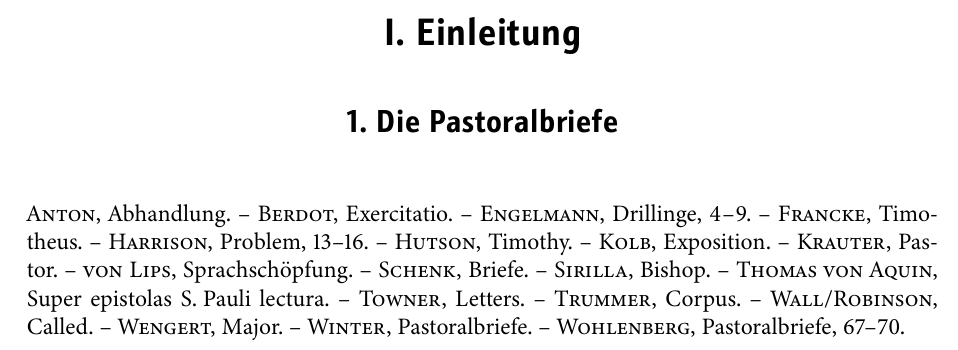
I’m pleased to note the presence of section bibliographies—that seems to be a growing trend, and I hope it continues. Note the wise employment of very abbreviated titles; that’s a good practice generally, and helps when trying to engage a great deal of scholarship in a relatively brief commentary.
And for a critical commentary, Krauter’s is “relatively brief,” due no doubt to HNT series constraints. Commentaries of 700-900 pages on the Pastorals are not uncommon these days (Mounce, 778; Pao: 831; Porter: 969; Tsuji, 759), and Krauter’s weighs in at 367 pages.

Though he favors the letters’ pseudonymity, Krauter is not of the mindset of much 20th-century scholarship that embraced that position as an accepted dogma. After a succinct multi-part summary of the status quaestionis, he concludes,

Die Sichtung der Argumente führt zu keinem klaren Bild, aber zu einer Tendenz: Es ist nicht sicher nachweisbar, dass alle drei Briefe oder einige von ihnen nicht von Paulus stammen. Es wird aber doch deutlich, dass die Annahme der Echtheit der Briefe große Probleme mit sich bringt. Sie macht unumgänglich, entweder Teile der Apg und andere Paulusbriefe für historisch falsch oder lückenhaft zu erklären oder mithilfe der Two imprisonments-Theorie eine Art Irgendwann für die Entstehung der Past zu schaffen. Dazu kommen die Spannungen in der vorausgesetzten Kommunikationssituation und die Hinweise auf eine frühe Zehnbriefesammlung ohne Past . . . . All dies lässt die Unechtheit der drei Briefe als plausiblere Annahme erscheinen, jedoch nicht als sicheres Wissen, auf das man allzu viele weitere Hypothesen bauen sollte. (xxvii)

An examination of the arguments yields no clear picture, yet it does reveal a trend: it cannot be conclusively proven that all three letters—or even some of them—did not originate with Paul. Nevertheless, it becomes evident that assuming the letters’ authenticity entails significant difficulties. Such an assumption necessitates either dismissing parts of Acts and other Pauline letters as historically inaccurate or incomplete, or invoking the “two imprisonments” theory to posit a vague timeframe for the composition of the Pastoral Epistles. Added to this are the tensions inherent in the implied communication context and the indications of an early ten-letter collection that excluded the Pastoral Epistles . . .. All these factors make the inauthenticity of the three letters appear the more plausible hypothesis—though not a certainty upon which too many further hypotheses should be built. (Google Translate)

When it comes to his own approach to the letters, he does take them as pseudonymous, though he observes the question of authenticity would not adjust his interpretation in most cases. He finds it more likely that the same author wrote all three letters.

In preparation for this volume, Krauter produced an impressive collection of research pieces which informed the production of the commentary proper:

“1 Tim 4:13: Public Lecture or Private Study?” Journal of the Bible and Its Reception 12.2 (2025): 215–30. 

“1 Tim 5:19‒21: The Beginnings of Ecclesiastical Disciplinary Law?” Zeitschrift der Savigny-Stiftungfür Rechtsgeschichte: Romanistische Abteilung 112 (2026): 301–22.  

“‘All Things Bright and Beautiful’: La théologie de la création dans 1 Timothée.” Revue de théologie et de philosophie 155 (2023). 

“Auf den zweiten Blick: Eine Hinführung zu den Pastoralbriefen.” Bibel und Kirche 78.2 (2023). 

“Cretan Memories: Crete in the Letter to Titus and the Acts of Titus.” Early Christianity 13 (2022): 455–67.  

“Exilliteratur und die Gattung des Zweiten Timotheusbriefes.” Revue Biblique 129 (2022): 183–98. 

“Ein Geist der Besonnenheit? Σωφρονισμός in 2Tim 1,7.” Zeitschrift für die neutestamentliche Wissenschaft 114.1 (2023): 123–36.

“Geistlose Briefe? Πνεῦμα in den Timotheusbriefen und im Titusbrief.” In Geist | Ruach | Pneuma | Spiritus. Exegetische, theologische, religionsgeschichtliche und phänomenologische Perspektiven. Edited by R. Feldmeier, J. Frey, and B. Schliesser. Wissenschaftliche Untersuchungen zum Neuen Testament. Tübingen: Mohr Siebeck, forthcoming. 

“Genderrollen in den Pastoralbriefen: Ein Experiment mit verschiedenen Lesestrategien.” Theologische Literaturzeitung 146.5 (2021): 375–88. 

“Ich weiß, wem ich mein Depositum anvertraut habe (2 Tim 1,12).” Biblische Zeitschrift 68 (2024).  

“Die Kirche – Pfeiler und Fundament der Wahrheit? zur Übersetzung und Auslegung von I Tim 3,15f.” Theologische Zeitschrift 77.1 (2021): 45–59. [English abstract at close] 

“The Lord be with your spirit (2 Tim 4:22a).” Revue Biblique 130 (2023).  

“Ordination und Neues Testament.” Pages 11–28 in Ordination: Grundfragen und Impulse aus reformierter Perspektive. Edited by Stefan Krauter and Matthias D Wüthrich. Zürich: Theologischer Verlag, 2023. 

“The Pastoral Epistles and the Jewish Paul.” Pages 139–156 in Reception of Paul during the First Two Centuries: Exploration of the Jewish Matrix of Early Christianity. Edited by František Ábel. Lanham, MD: Lexington Books/Fortress Academic, 2023. 

“Die Pastoralbriefe im Dienst reformatorischer und antireformatorischer Polemik bei Caspar Cruciger dem Älteren und Ambrosius Catharinus.” Pages 247–68 in Reformatorische Paulusauslegungen. Edited by Stefan Krauter and Manuel Nägele. History of Biblical Exegesis 5. Tübingen: Mohr Siebeck, 2023. 

“In Würde altern: Tit 2 und antike Vorstellungen vom Alter.” Theologische Zeitschrift 79.2 (2023): 146–65. 

“Zwischen Oikos und Polis: Die Gemeinde und ihre Gemeindeversammlung in den Pastoralbriefen.” Pages 383–403 in Qahal und Ekklesia: Typen und Funktionen von Versammlungen im Alten und Neuen Testament und ihren Umwelten. Edited by Joachim J. Krauter, Stefan Krauter, and Wolfgang Oswald. Studies in Cultural Contexts of the Bible 19. Leiden: Brill, 2024.  

_______
Annual Bibliographies on the Pastorals

In the first half of each year, we compile and post annual bibliographies for researchers in the Letters to Timothy and Titus. These lists of just-published and soon-to-be published studies aim to give some idea of research trends and to help researchers in the Pastorals maintain control of the secondary literature. Among other avenues of bibliographic discovery, we solicit the input of Pastorals scholars who have published previously on the letters. Our thanks to all who contributed!

Our annual bibliography of recent publications on the Letters to Timothy and Titus covers contributions from all of 2024 and early 2025. Over 180 items long and international in scope, the list contains monographs, journal articles, and commentaries, as well as lists of dissertations and conference presentations on the letters. It is available for viewing and downloading here.

Our annual bibliography of forthcoming academic publications on the Letters to Timothy and Titus is wide-ranging, containing over fifty forthcoming works, including essays, monographs, and commentaries. This bibliography is available for viewing and downloading here.

2024 Annual Pastorals Bibliographies

Around April of each year, we compile and post annual bibliographies for researchers in the Letters to Timothy and Titus. These lists of just-published and soon-to-be published studies aim to help researchers in the Pastorals maintain control of the secondary literature, and to give some idea of research trends. Among other avenues of bibliographic discovery, we solicit the input of Pastorals scholars who have published previously on the letters. Our thanks to all who contributed!

Our annual bibliography of recent publications on the Letters to Timothy and Titus covers contributions from all of 2023 and early 2024. Over 125 items long and international in scope, the list contains monographs, journal articles, and commentaries, as well as lists of dissertations and conference presentations on the letters. It is available for viewing and downloading here.

Our annual bibliography of forthcoming academic publications on the Letters to Timothy and Titus is wide-ranging, containing around 60 forthcoming works, including essays, monographs, and commentaries. This bibliography is available for viewing and downloading here.

A Half-Century of Pastorals Scholarship

I’ve made a first attempt at compiling a chronological list of relatively recent Pastorals scholarship. This first edition provides a year-by-year accounting of scholarly monographs and commentaries on the Pastorals from 1970 to the present (and future!), in any language. The table is available via the “Scholarship Timeline” tab at the top of the page. The full presentation is available here, and includes, in addition to the table, a full bibliography of all the works listed in the table.

I put together an early version of this table to help me to see what scholarship a given author had to draw upon at any given time in the last fifty years, and thought this sort of thing might be useful for others involved in Pastorals research.

Persig, “The Language of Imperial Cult and Roman Religion in the Latin New Testament: The Latin Renderings of ‘Saviour’”

Anna Persig, “The Language of Imperial Cult and Roman Religion in the Latin New Testament: The Latin Renderings of ‘Saviour.’” New Testament Studies 69.1 (2023): 21–34.

Students of the Pastorals may benefit from Persig’s work on σωτήρ reflected in this article, given the significance of the term in the letters. Here’s the abstract:

The title σωτήρ, ‘saviour’, is bestowed on Christ and God in the New Testament and rendered in the Latin translations by conseruator, saluificator, salutificator, salutaris and saluator. Although these terms convey the same meaning, they are not interchangeable: this study argues that conseruator, which is the most frequent word for saviour on imperial coins, is rarely attested in the Latin versions because of its association with the imperial cult. The predominant translation, saluator, was coined as an alternative rendering to the other words which had religious and political connotations.

The article is open access and is available here.

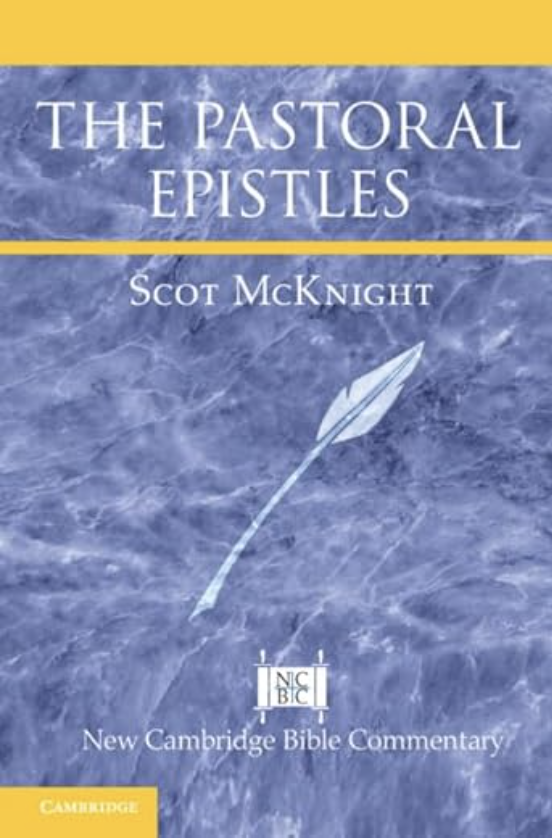
McKnight, The Pastoral Epistles (NCBC)

Scot McKnight, The Pastoral Epistles. New Cambridge Bible Commentary. Cambridge: Cambridge University Press, 2023.

Cambridge has just released Scot McKnight’s revision of the Pastorals volume in the New Cambridge Bible Commentary series. The NCBC series replaces — no surprise — the Cambridge Bible Commentary series produced in the 1960s and 1970s.

The CBC volume on the Pastorals was produced by Anthony Tyrrell Hanson in 1966. In a day when publications were not nearly as prevalent, A. T. Hanson would have been considered well-published in the Pastorals, having produced Studies in the Pastoral Epistles (London: SPCK, 1968), a collection of essays expanding on what he was able to include in the CBC volume; “The Theology of Suffering in the Pastoral Epistles and Ignatius of Antioch,” in Studia Patristica 17/2, ed. Elizabeth A. Livingstone (Oxford: Pergamon, 1982), 694‒96; and the final fruit of his Pastorals work, The Pastoral Epistles, New Century Bible Commentary (Grand Rapids: Eerdmans, 1982). The staying power of Hanson’s scholarship is suggested by Wipf & Stock’s 2015 reprint of Hanson’s 1968 Studies.

McKnight is a well-known name in New Testament scholarship, and is bringing his wide range of expertise to the Pastorals. His previous publication specifically targeting the Pastorals, to my knowledge, consists of his “Eusebeia as Social Respectability: The Public Life of the Christian Pastor,” in Rhetoric, History, and Theology: Interpreting the New Testament, ed. Todd D. Still and Jason A. Myers (Lanham, MD: Lexington/Fortress, 2022), 161–77 (material which will be presented at the inaugural meeting of the IBR Pastoral Epistles Research Group). Note also his “From Timely Exegesis to Contemporary Ecclesiology: Relevant Hermeneutics and Provocative Embodiment of Faith in a Corona-Defined World – Generosity During a Pandemic,” HTS Teologiese Studies/Theological Studies 77.4 (2021): a6426.

The publisher gives this summary: “In the church tradition three letters, now known as the Pastoral Epistles, are attributed to the apostle Paul. They are unlike any other letters by Paul. They are written to two of his closest companions, Timothy and Titus, and they instruct those two leaders how to lead gathered Christians in Ephesus and in Crete. The letters contain plenty of instruction for how church leaders at that time, and in those places, were to function. In this commentary, Scot McKnight seeks to explain the major themes of the Pastoral Epistles – church order, false teaching, and failing Christians – and their foundational vision for how Christians could make a good impression in public life. These three brief letters express a view of how Christians were to live in the Roman empire in a way that does not offend public sensibilities. They prescribe a way of public behavior best translated as ‘civilized religion.'”

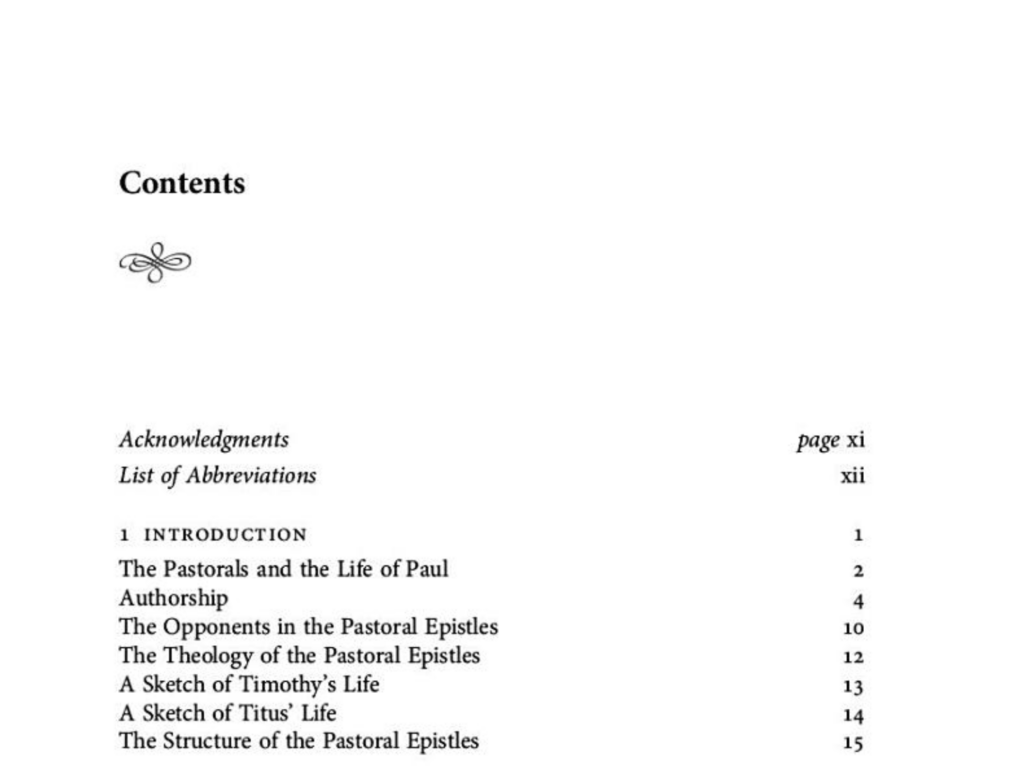
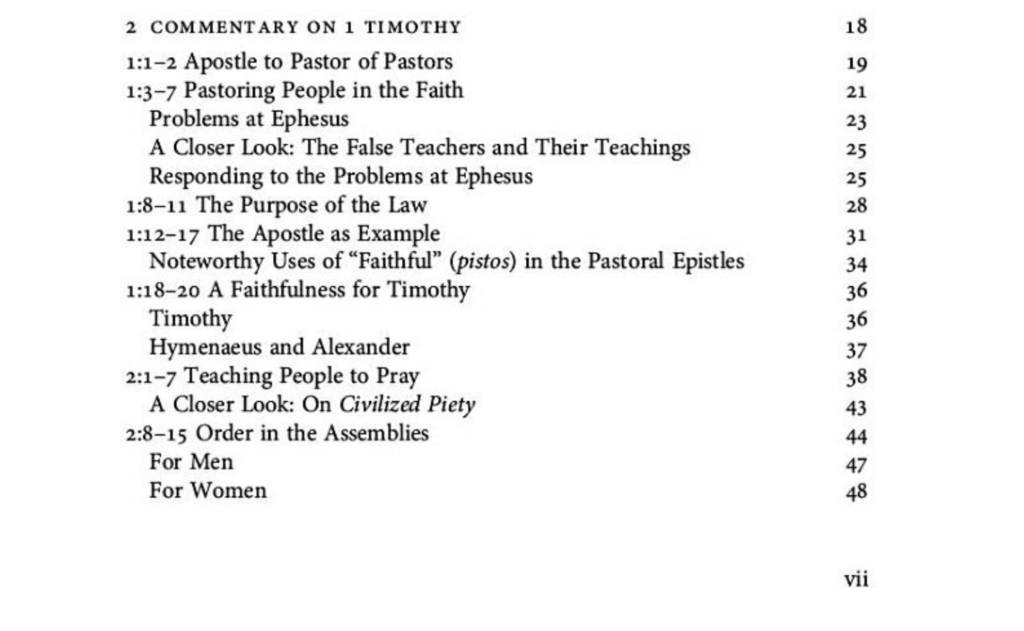
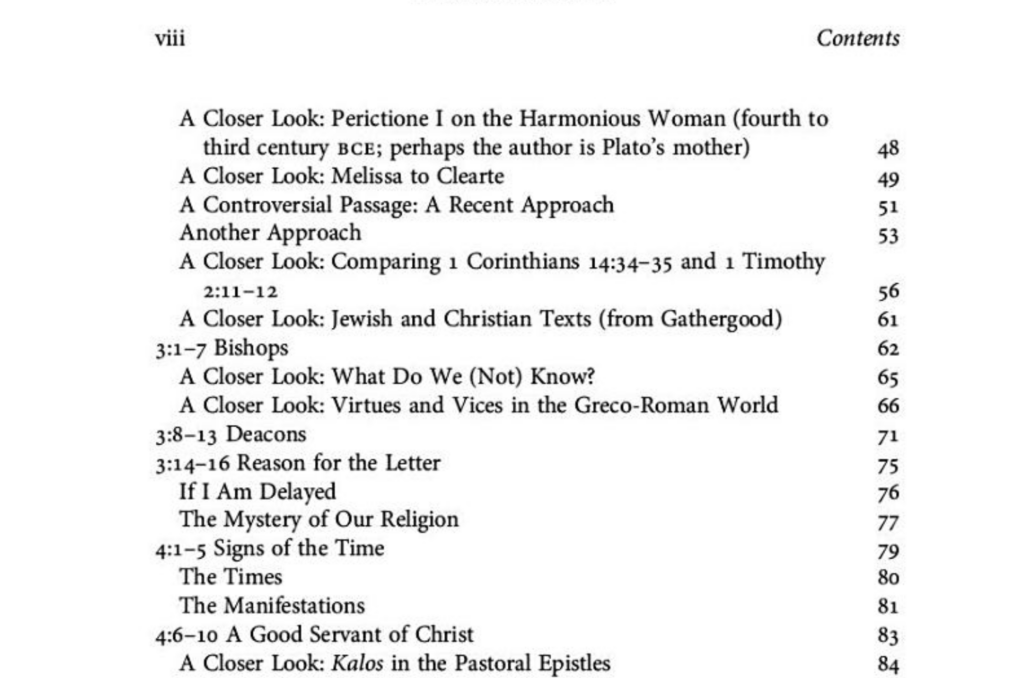
Contents and the first six pages of the introduction were available to me at Amazon; they suggest robust engagement with scholarship, including recent work by Hoklotubbe, Van Nes, and Kidson. What interests me immediately in the table of contents are the excurses scattered throughout.

Pao, 1–2 Timothy, Titus

David Pao, 1-2 Timothy, Titus. Brill Exegetical Commentary 1. Leiden: Brill, 2023.

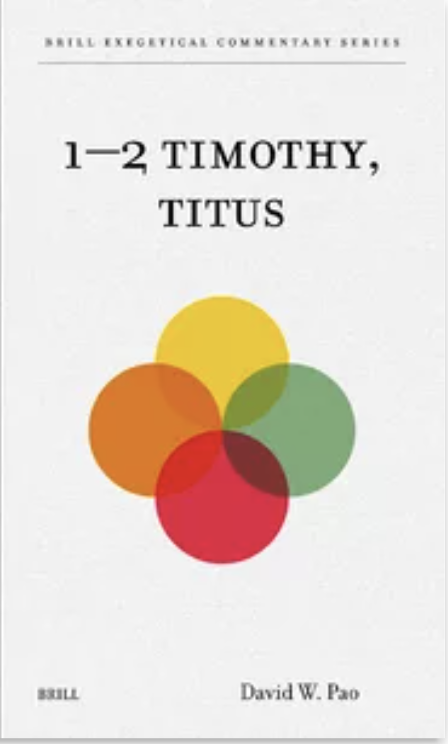
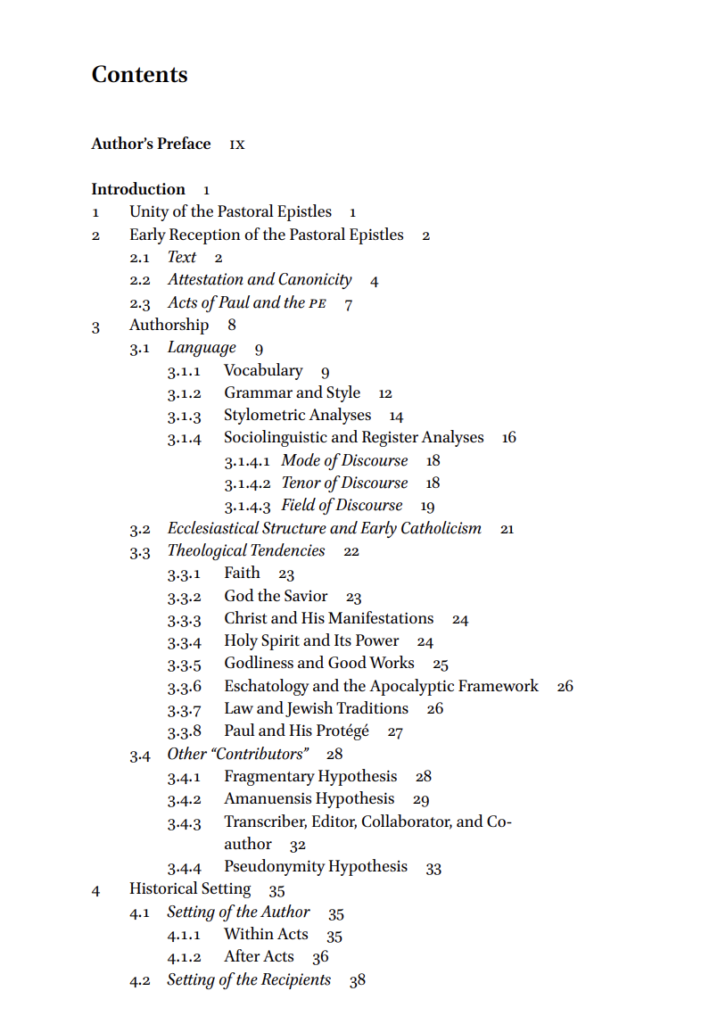
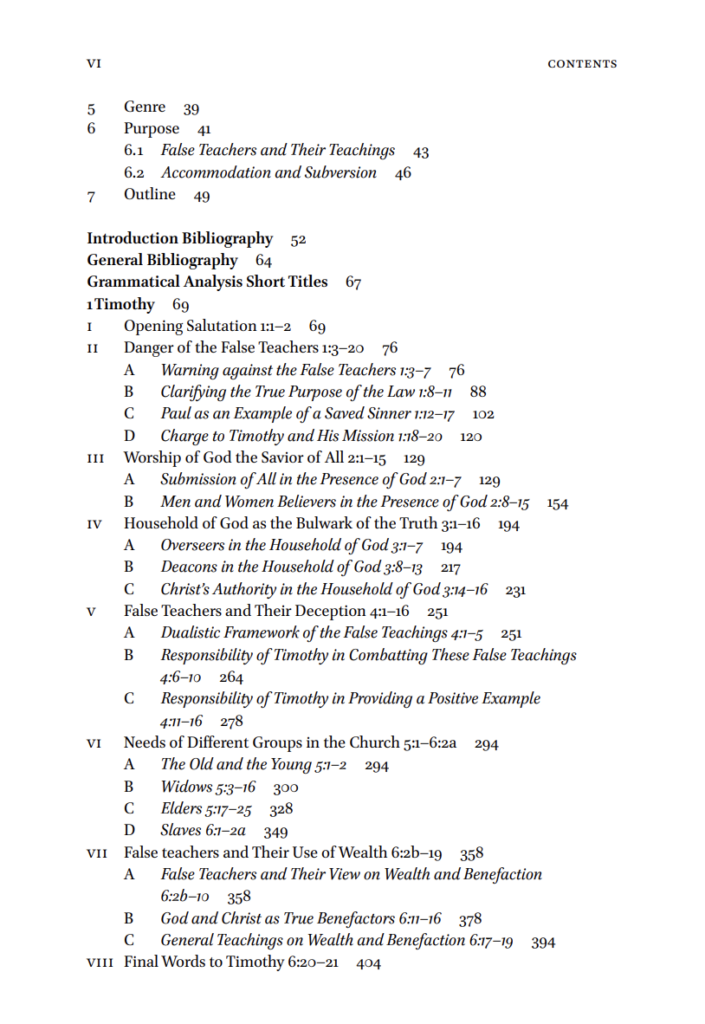
David Pao, Dean and Professor of New Testament at Trinity Evangelical Divinity School, has produced 1–2 Timothy, Titus as the inaugural volume of the Brill Exegetical Commentary. The cheerful-looking cover may not immediately suggest the heft of this volume, which at over 825 pages is a massive tome, and beats Mounce’s WBC contribution for page count. I’m looking forward to receiving a review copy of this volume.

I love the first paragraph of the preface:

“Those expecting an apologia here for burdening modern readers with yet
another commentary on the Pastoral Epistles (PE) will be disappointed. Previous works have not exhausted either the meaning or the nuances of the PE,
nor will this one. While the textual data argue against limiting the PE to either
an abstract manual of ecclesiastic order or a narrow contextual response to the
false teachings of the time, a consensus appears to have developed in certain
circles where the author is considered to be a follower of Paul who reinvents
Christianity into a faith that accommodates itself to the wider mainstream
society. A reexamination of linguistic and conceptual patterns often seen as
reflecting such an accommodating stance may, however, point in a different
direction. Perhaps the subversive voice of the Pauline gospel can be heard
afresh with the renewed appreciation of not only the rhetorical strategies of
the author but also the theological significance of such strategies. And so the
journey continues. It is my prayer that with this and subsequent commentaries,
the complexity and richness of the PE will be further appreciated by those who
may find this gospel equally relevant and urgent in the contexts they find themselves.”

The Pastorals at ETS and SBL 2023

The 2023 ETS program does not appear to list any sessions whose titles specify a connection to the Pastorals. Note the following possibilities, however:

The Evangelicals and Women session titled “Come Let us Reason Together: Women, Authority and Scripture”

David W. Hester, “Did Paul Accept the Apocryphon of Jannes and Jambres as Scripture?”

Julie Walsh, “Theological Motivations: Eph 5.33 Compared to Other NT Household Code Subsection Interpretations”

Kyeong Seo, “Anthropological Significance in the Emergence of the Concept ‘Conscience’ in the Pauline Epistles.”

.

The 2023 SBL Annual Meeting Program lists the following sessions which may be of interest to Pastorals researchers:

Isaiah Allen, Booth University College, “The Fictional Household of Titus 2:1–15”

Michael Bird, Ridley Melbourne, “Can We Place the Pastoral Epistles in the Chronological Space of the Second Century?”

Esther Cen, Seattle Pacific University, “A Chinese Interpretation of Youth Leadership and the Household Metaphor in 1 Timothy”

A. Andrew Das, Elmhurst University, “The Faithful Univira and Remarriage in the Pastorals”

Tobias Hägerland, University of Gothenburg, “To the Jew First but Also to the Greek: Why Are There Three Pastoral Epistles?”

Jens Herzer, Universität Leipzig, “Between Cowardice and Courage: A Philonic Background of 2 Tim 1:7?”

Lyn Kidson, Macquarie University, “‘Go Home!’ Divisions between Private and Public Space in the Pastoral Epistles“

Lyn Kidson, Macquarie University, “Intimate Partner Violence, Male Headship, and Reading 1 Timothy 2:13 as the Basis for Women’s Autonomy”

Scot McKnight, Northern Seminary, “Eusebeia as Social Respectability: The Public Life of the Christian Pastor”

Katherine Shaner, Wake Forest University, “Timothy, Slave of Christ, Slave of Paul?”

W. Andrew Smith, Shepherds Theological Seminary, “ECM Pastoral Epistles: Report”

Note also the panel discussion on Edith M. Humphrey, Mediation and the
Immediate God: Scriptures, the Church, and Knowing God
, which appears to engage 1 Timothy 2:5 substantively.

New IBR research group on Pastoral Epistles

The Institute for Biblical Research has established a new Research Group on the Pastoral Epistles, with the first meeting slated at the SBL annual meeting in San Antonio.

Led by Osvaldo Padilla and Lyn Kidson, the first session will present research regarding “The Pastoral Epistles and Space.” The scheduled presentations are as follows:

Lyn Kidson, Macquarie University
“Go Home!” Divisions between Private and Public Space in the Pastoral Epistles

Scot McKnight, Northern Seminary
Eusebeia as Social Respectability: The Public Life of the Christian Pastor

Isaiah Allen, Booth University College
The Fictional Household of Titus 2:1–15

Michael Bird, Ridley Melbourne
Can We Place the Pastoral Epistles in the Chronological Space of the Second Century?

Robertson, Reading the Letter to Titus in Light of Crete

Monographs on the Pastorals are uncommon enough that I wanted to mention this forthcoming volume even though it won’t be available for half a year:

Michael Robertson, Reading the Letter to Titus in Light of Crete: Dynamics of Early Christian Identity Construction. Critical Approaches to Early Christianity 3. Leiden: Brill, 2024.

Brill provides this summary of the volume: “This volume argues that Titus’s invocation of Crete affected the ways early readers developed their identities. Using archaeological data, classical writings, and early Christian documents, he describes multiple traditions that circulated on Crete and throughout the Roman Empire concerning Cretan Zeus, Cretan social structure, and Cretan Judaism. He then uses these traditions to interpret Titus and explain how the letter would intersect with and affect readers’ identities. Because readers had differing conceptions of Crete based on their location and access to and evaluation of Cretan traditions, readers would have developed their identities in multiple, conflictual, even contradictory ways.”

Robertson’s monograph joins his other publications, past and forthcoming, related to the Pastorals. In chronological order:

“Neophyte Pastors: Can Titus 1 Be Used to Justify Placing New Converts in the Office of Pastor?” Southwestern Theological Journal 57.1 (2014): 77‒86.

“1 and 2 Timothy.” In James Crossley and Alastair Lockhart, eds., Critical Dictionary of Apocalyptic and Millenarian Movements. 28 October 2021.

“Letter of Paul to Titus.” In James Crossley and Alastair Lockhart, eds., Critical Dictionary of Apocalyptic and Millenarian Movements. 28 October 2021. Retrieved from https://www.cdamm.org/articles/titus.

“Pauline Apocalypticism and the Pastoral Epistles.” In James Crossley and Alastair Lockhart, eds., Critical Dictionary of Apocalyptic and Millenarian Movements. 28 October 2021. Retrieved from https://www.cdamm.org/articles/apocalypticism-pastoral-epistles

“Zeus in the Interpretation of the Letter to Titus in the Church Fathers and the Acts of Titus.” Apocrypha 33, forthcoming.

“Anti-Judaism in the Pastoral Epistles.” In Judeophobia in the New Testament: Texts, Contexts, and Pedagogy. Edited by Sarah Rollens, Eric Vanden Eykel, and Meredith Warren. Grand Rapids: Eerdmans, forthcoming.

“Deutero-Pauline Epistles.” In James Crossley and Michelle Fletcher, eds, Introduction to the New Testament. London: SCM Press, forthcoming.

“Eve in the New Testament.” In Katie B. Edwards and Caroline Blyth, eds., Routledge Handbook of Eve. London: Routledge, forthcoming.

“Pauline Pseudepigrapha as Lieux de Mémoire: Using and Applying Pseudepigraphic Texts in the Church.” In Proceedings of the Pastoral Implications of Pseudepigraphy and Anonymity in the New Testament Conference, ed. David Capes. Eugene, OR: Wipf and Stock, forthcoming.

« Older posts

© 2026 Pastoral Epistles

Theme by Anders Noren — Up ↑